The Central Bank of Nigeria (CBN) has reset its Monetary Policy Rate (MPR) to 23 per cent as part of efforts to strengthen the transmission of monetary policy and align its operating framework more closely with market conditions.
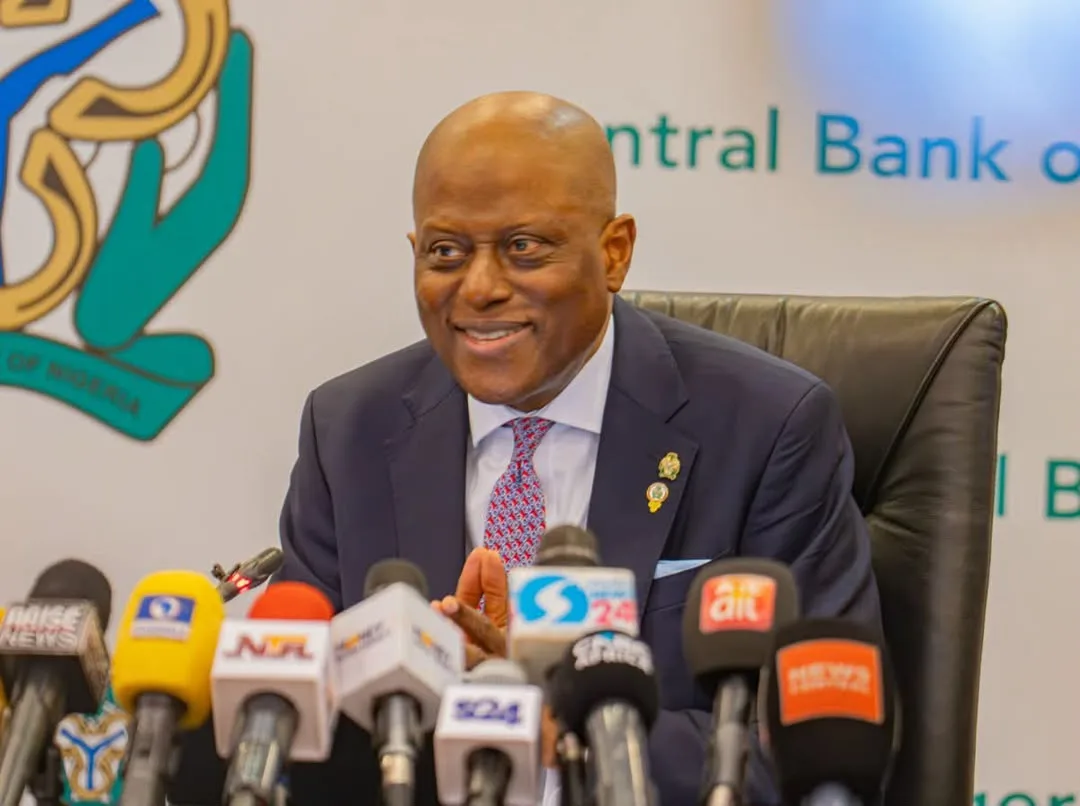
The decision was announced by CBN Governor, Olayemi Cardoso, at the 307th meeting of the Monetary Policy Committee (MPC) in Abuja on Tuesday.
The committee also adjusted the standing facilities corridor to plus 50 and minus 300 basis points around the MPR, while retaining the cash reserve requirement at 45 per cent for deposit money banks, 16 per cent for merchant banks and 75 per cent for non-TSA public sector deposits.
Cardoso said the adjustment followed the MPC’s assessment of developments in the domestic and global economies, as well as emerging risks to the economic outlook.
According to him, the reset was aimed at addressing the divergence between the MPR and prevailing market rates, which had weakened the effectiveness of monetary policy transmission.
He stressed that the adjustment should not be interpreted as a change in the underlying monetary policy stance, describing it instead as an operational realignment designed to improve the effectiveness of the policy framework.
The governor said the CBN’s ongoing reforms, including the adoption of the Nigerian Overnight Financing Rate (NIFOR) as a transaction-based operational benchmark, had improved transparency in money market operations.
He said the changes would help restore the MPR as the principal signal of monetary policy and support Nigeria’s transition towards an inflation-targeting framework.
The MPC also noted improvements in key economic indicators, including moderating inflation, stronger external reserves, improved external-sector fundamentals and rising investor confidence.
Cardoso disclosed that Nigeria’s balance of payments surplus increased to $3.51 billion in the second quarter of 2026, from $2.38 billion recorded in the first quarter.
The CBN governor said the reforms undertaken by the apex bank had contributed to macroeconomic stabilisation, adding that the economy was showing increasing resilience and moving towards stronger growth.