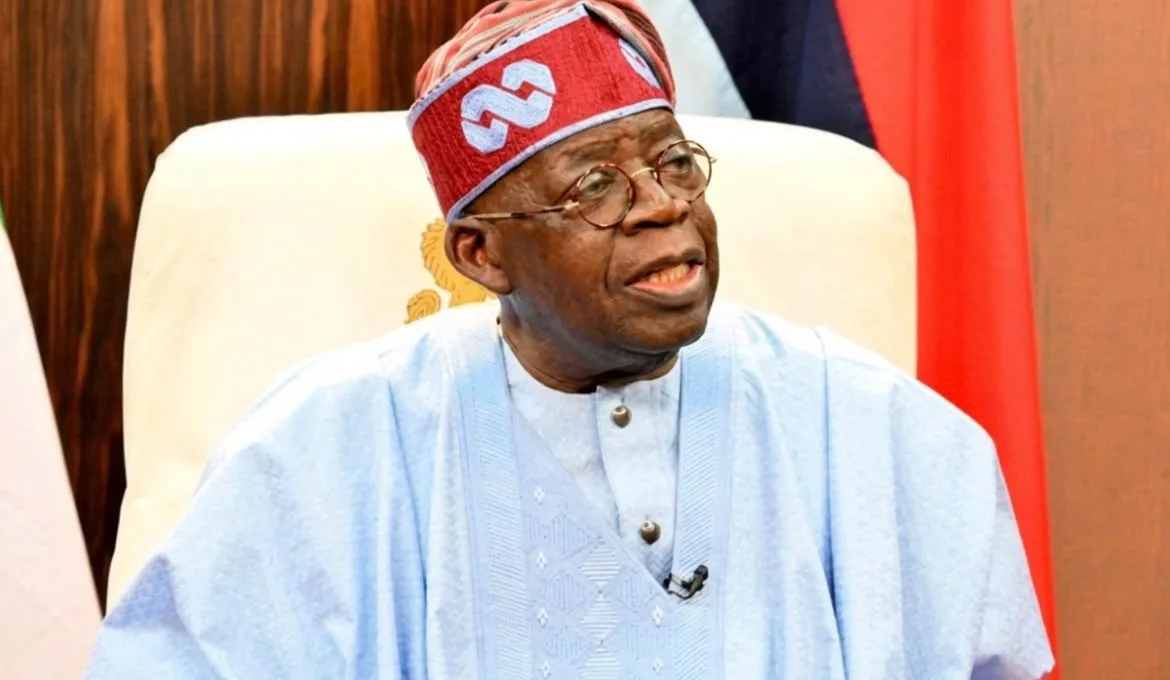
President Bola Tinubu has said Nigeria is moving into a new phase of economic growth after what he described as a difficult period of reforms and adjustment.
Tinubu made the declaration on Thursday in his Independence Day address to mark Nigeria’s 66th Independence Anniversary, themed “From Reforms to Prosperity.”
The President said his administration inherited an economy weighed down by longstanding distortions and that addressing the problems required difficult decisions whose effects were initially painful for citizens.
He likened the reform process to treating a serious illness, saying the measures came with difficult side effects but were necessary to restore the economy.
According to Tinubu, recent economic indicators suggest that Nigeria is beginning to experience greater stability. He cited economic growth of more than four per cent this year, a decline in inflation from its peak, improved foreign reserves and increased stability in the foreign exchange market.
He also highlighted Nigeria’s non-oil export performance, saying the country generated more than $6 billion in non-oil export revenue in 2025, describing it as the highest figure recorded.
With the reform phase underway, Tinubu said the government’s attention would increasingly turn to translating economic gains into improved living conditions for Nigerians.
He identified lower production and transportation costs as key to reducing the cost of living, while outlining plans to expand mechanised agriculture, irrigation, access to farm inputs, storage facilities and transportation infrastructure.
The President said investments in roads, railways and ports would also strengthen connections between producers and markets, while gas-powered industries, digital infrastructure and skills development would support industrial expansion and job creation.
Tinubu further said the government would continue social intervention programmes for vulnerable Nigerians, including direct support for poor households and improvements to the National Social Register.
He pointed to the Nigerian Education Loan Fund and CREDICORP as part of efforts to expand access to education and consumer credit.
Acknowledging that many Nigerians still face difficulties with food, healthcare, education and transportation costs, Tinubu said the problems accumulated over several decades and could not be resolved within a single administration.
“We cannot erase in four years what accumulated over generations. But we can change its course,” he said.
The President said the ultimate goal of the government’s economic programme was to move beyond managing poverty and create sustained opportunities capable of lifting millions of Nigerians into greater prosperity.
Tinubu concluded by describing the reform period as a difficult journey that Nigeria had now largely navigated, declaring that the country had “passed through our own Red Sea” and was ready to move towards prosperity.