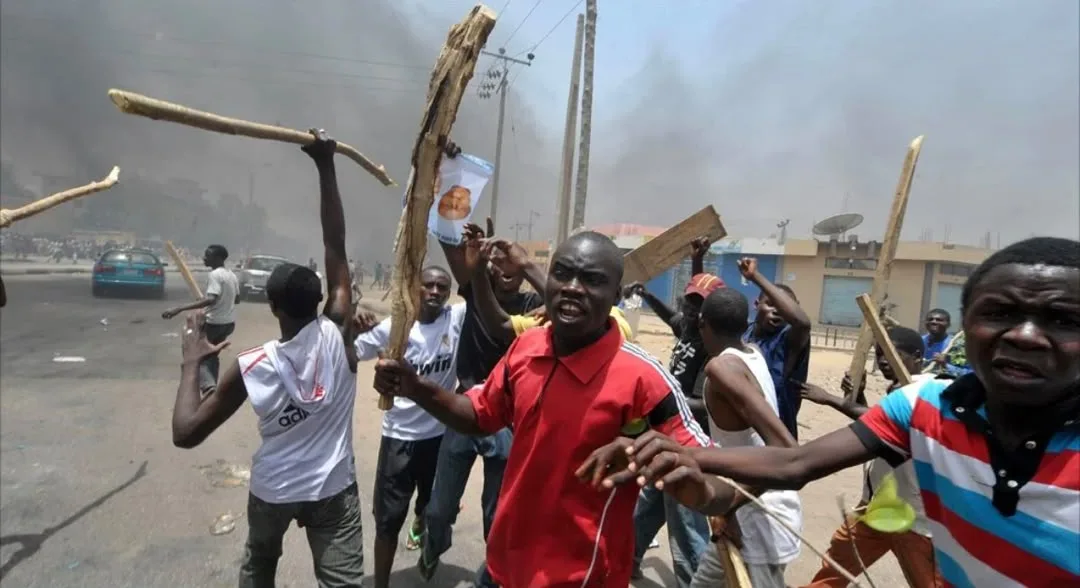
Political activities ahead of Nigeria’s 2027 general elections are increasingly being accompanied by reports of disrupted meetings, blocked movements and clashes involving supporters of rival parties, raising questions about the security of the campaign environment.
Since campaign activities began in August, incidents have been reported in several states, including Benue, Kogi, Enugu and Rivers. Opposition parties have alleged that some of their meetings and activities were targeted, while government officials and other political actors have denied responsibility for some of the incidents. (Daily Report)
One of the most prominent cases occurred in Benue State on September 8, when the convoy of Nigeria Democratic Congress presidential candidate, Peter Obi, was blocked by youths along the Makurdi-Gboko federal highway.
The Benue State Police Command later announced the arrest of 46 people allegedly linked to the obstruction. Police Commissioner Cletus Nwadiogbu said the situation created tension that could have escalated into violence and warned against political intolerance as the 2027 elections approach. (Channels Television)
However, responsibility for the incident remains disputed. Obi alleged that individuals linked to the state government were behind the blockade, while the Benue State Government denied involvement and said it had no knowledge of the alleged mobilisation. Police investigations were ongoing at the time of the arrests. (Channels Television)
Other incidents have also been reported. In Kogi State, a political meeting of the African Democratic Congress in Ejule, Ofu Local Government Area, was reportedly disrupted, while political gatherings involving the NDC and Peoples Democratic Party were also reportedly affected in parts of Enugu. A meeting organised by the ADC in Rivers State was similarly reported to have been disrupted. (Vanguard News)
The African Democratic Congress has separately raised concerns over alleged attacks on its members and supporters, citing incidents across several states between July 2025 and September 2026. The party called for stronger protection of political activities and enforcement of citizens’ rights to participate in politics. (Vanguard News)
The pattern has also drawn attention to the wider question of whether political parties can organise meetings, mobilise supporters and campaign without intimidation or disruption.
Beyond the immediate incidents, repeated disturbances could affect participation if party members and supporters become reluctant to attend political gatherings. It could also place additional pressure on security agencies to identify potential flashpoints and respond before confrontations escalate.
Nigeria’s political parties and presidential candidates signed a peace accord in August aimed at promoting peaceful and transparent campaigns. Recent incidents, however, have renewed attention on how effectively such commitments can be maintained as political competition intensifies. (situationroomng.org)
With the 2027 elections still months away, the reported incidents have made campaign security an increasingly important part of the electoral conversation. The response of political parties, security agencies and government authorities to emerging disputes will remain significant in determining whether political activities can proceed without intimidation, disruption or violence.