Jelili Gbadamosi
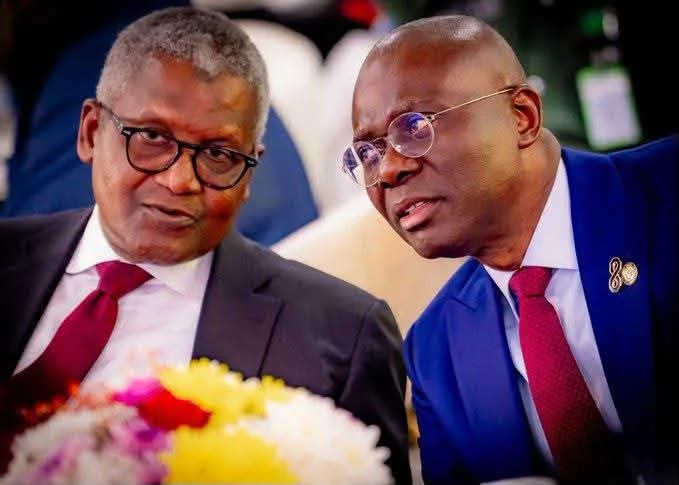
Lagos State Governor, Babajide Sanwo-Olu, has described the Dangote Refinery as evidence that Africa has the capacity to deliver large-scale industrial projects despite infrastructure and economic challenges.
Sanwo-Olu said the refinery, located in Ibeju-Lekki, Lagos, demonstrated the importance of building supporting infrastructure alongside major investments.
The governor spoke on Thursday at the official launch of the Africa–Diaspora Leadership Programme 2026 Young Global Leaders Convening, themed “Building Africa at Scale,” held at the Dangote Refinery and Petrochemical Complex.
According to him, the refinery was constructed on reclaimed swamp, lagoon and open water, while additional facilities, including a jetty and power plant, were developed to support its operations.
Sanwo-Olu said the project survived several challenges, including the COVID-19 pandemic, currency depreciation and rising construction costs, before becoming operational.
He, however, warned that Africa must develop systems that make major projects easier to replicate rather than depend on individual entrepreneurs who personally overcome every infrastructure challenge.
“Mr. Dangote did not build a refinery. He built a country around a refinery, and then he built the refinery,” Sanwo-Olu said.
He explained that the absence of adequate port facilities and reliable power required the development of additional infrastructure before the refinery could function effectively.
The governor said such an approach should not become the model for future investments, stressing that institutional capacity and shared infrastructure are necessary for sustainable development.
Sanwo-Olu cited the Lekki Deep Sea Port, Lekki Free Zone and Lagos Blue Line rail as examples of infrastructure projects aimed at reducing barriers for future investors.
He also called for greater involvement of African pension funds, sovereign wealth funds and the diaspora in financing and owning strategic assets across the continent.
According to him, Africa’s next phase of development requires collective investment rather than dependence on individual “heroism”.
The governor urged participants at the leadership programme to transform their networks and discussions into practical projects capable of addressing Africa’s development challenges.
He also drew parallels between Lagos and New York, saying both cities demonstrate how determination and investment can transform challenging environments into thriving urban centres.
Sanwo-Olu maintained that Africa should approach global partnerships from a position of confidence, insisting that the continent has already begun building the future it wants.