ABEOKUTA — The Ibadan Electricity Distribution Company Plc (IBEDC) has announced plans to explore alternative energy sources to augment electricity supply from the national grid, particularly for its Maximum Demand (MD) customers.
The company said the initiative would include exploring bilateral Power Purchase Agreements (PPAs) that would enable it to procure electricity directly from Generation Companies (GenCos), as well as leveraging mini-grid and other off-grid energy solutions to address supply shortfalls across its franchise.
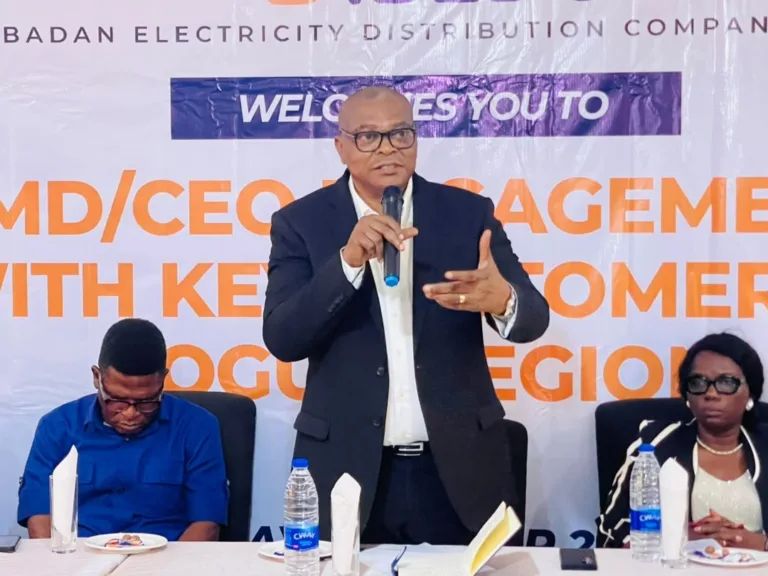
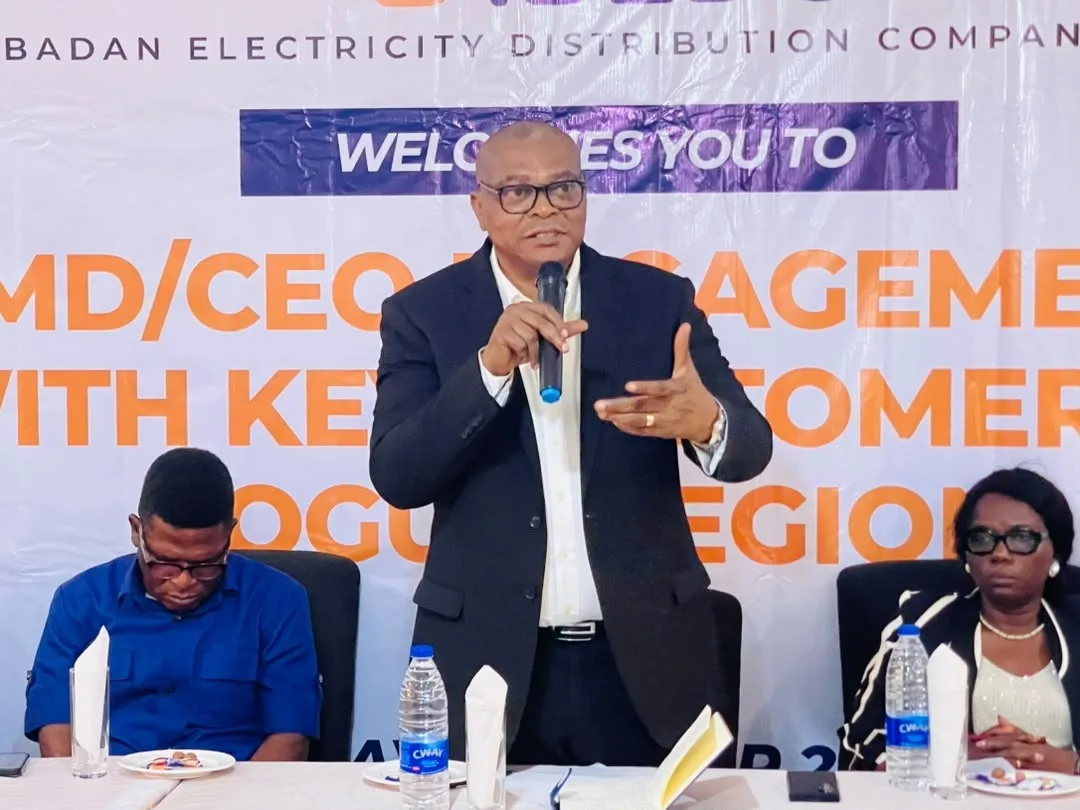
The Managing Director/Chief Executive Officer of IBEDC, Mr. Deolu Ijose, disclosed this during stakeholder engagement sessions with leaders of the company’s Maximum Demand customer segment in Ogun State, one of the company’s franchise states.
The engagements, held in Sagamu and Ota, provided an opportunity for IBEDC management and major industrial customers to discuss electricity supply challenges, strengthen partnerships and identify practical measures to improve service delivery.
Speaking at the meetings, Ijose highlighted progress being made under the company’s new Board and Management, which assumed leadership earlier this year following the end of a prolonged period of receivership that had constrained critical investments in the distribution network.
“When our new leadership took office, one of our immediate priorities was to address the investment constraints that had hindered network improvements. We are now focused on deploying available resources strategically, strengthening our infrastructure and improving service delivery,” he said.
The IBEDC boss emphasised the importance of Maximum Demand customers to economic growth, industrial productivity and employment, stressing that the company recognises the need for reliable electricity supply to support their operations.
“Our industrial customers are critical to the economic development of our franchise. We are undertaking feeder rehabilitation, deploying auto-reclosers and working with relevant stakeholders across the electricity value chain to address grid supply constraints,” Ijose said.
“Our objective is to improve supply reliability and provide the enabling environment businesses need to grow,” he added.
According to the company, other operational interventions being pursued include feeder reinforcement, vegetation management along distribution lines, deployment of dedicated fault-response vehicles and exploration of alternative energy arrangements to complement electricity supplied through the national grid.
The stakeholder engagements also provided participating companies with an opportunity to raise operational concerns, seek clarification on ongoing interventions and engage directly with IBEDC management on measures aimed at improving electricity supply and voltage stability.
Representatives of participating companies welcomed the engagements, commending IBEDC for creating a platform for direct dialogue and demonstrating its willingness to address customer concerns.
A representative of AB Blast, Mr. Adekunle Hassan, said electricity availability and voltage stability remained essential to manufacturing operations.
Hassan added that improved communication regarding infrastructure maintenance, line upgrades and fault resolution would enable businesses to plan their production activities more effectively.
IBEDC said it would continue to engage with its industrial customers and other stakeholders as part of efforts to improve supply reliability, strengthen its distribution network and support economic activities across its franchise.